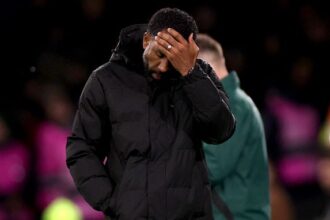

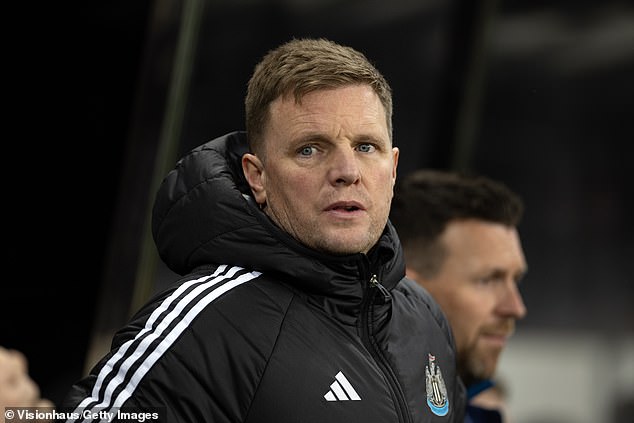
Eddie Howe was right to call for progress on Newcastle’s off-the-field projects – and not because their tangible existence will one day aid him directly.
He knows the lifespan of a manager will unlikely extend to the multiples of years it will take for stadiums and training grounds to be built. Rather, what he understands is the immediate power of the message their development can send – be that to those within or without.
One of Alexander Isak’s motivations for wanting to quit Newcastle was doubt over the height of the club’s ambition and pace of its infrastructural delivery. He, like Bruno Guimaraes, Sandro Tonali and others, was told of limitless ambition when signing for the club, and a new training facility was part of the sell.
But hierarchal metaphors about rockets ships ready for take-off have grown tiresome, especially when the club cannot get a spade in the ground, never mind a shuttle in the sky. Players feel this inertia. The training ground, in particular, has become emblematic of their wider concerns about the engagement and urgency of the Saudi-led ownership.
David Hopkinson, the new CEO, said this month that he wants the club to be among the best in the world within five years. Previous executives have spoken of similar goals and chairman Yasir Al-Rumayyan declared, in a glossy Amazon documentary, that he wouldn’t stop until Newcastle were ‘number one’.
None of that tallies with the training ground in which Howe and his squad currently work. There has been and continues to be investment and improvements, but as one observer told us last year, ‘it’s like putting lipstick on a pig’.
Eddie Howe was right to add a sense of urgency to Newcastle’s building projects – they risk being left behind if they stall much more

The owners have gone silent over plans to build a 65,000-seater stadium on Leazes Park
Given training grounds and the like fall outside of PSR calculations, there is disappointment, surprise and even worry as to why the Public Investment Fund have not, in four years, made any physical progress on the work we assumed would be a priority.
Manchester City, following the Abu Dhabi takeover in 2009, soon built a club (with actual bricks and mortar) that gave them the foundations to reach the top. So far, at Newcastle, it has been occasional words and no action when it comes to such development.
Howe calls it ‘limbo’ but some supporters are suspicious of ‘disinterest’. Either way, it has altered the perception of what Newcastle United was meant to become in a post Mike Ashley era. It is part of the reason why the futures of stars such as Tonali and Tino Livramento are uncertain, and why the club struggled to attract their very top targets this summer. Players talk.
But talk, when it comes to football-club owners, can be cheap. There needs to be blueprints followed by the footprints of construction workers and a message to the world that Newcastle are breaking new ground, not breaking promises.
Will Howe lead out the team in a new stadium on Leazes Park? Will Tonali cut the ribbon on a new training ground? To both of those, almost certainly not. But whatever time they have left at the club can be enriched by the excitement and enthusiasm of aspirational projects being unveiled and undertaken.
Because without it, even the grandest vision starts to feel like an empty sales pitch.